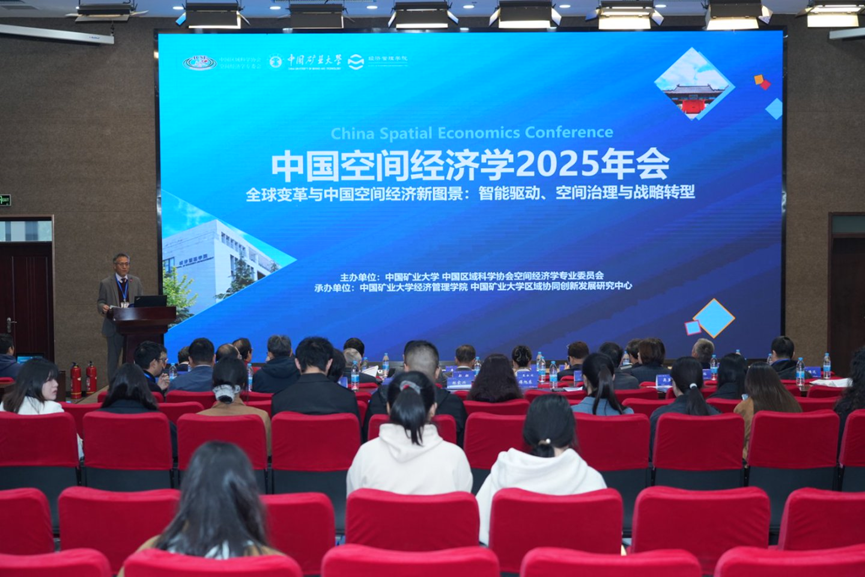
Opening of The 14th Annual Conference of the Chinese Spatial Economics Association
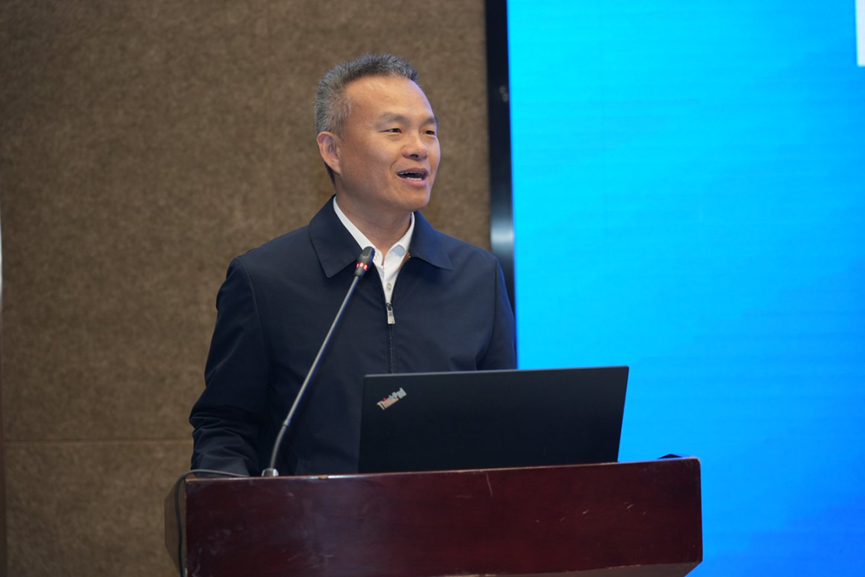
Speech by Prof. Ding Zhihua, Dean of SEM, CUMT
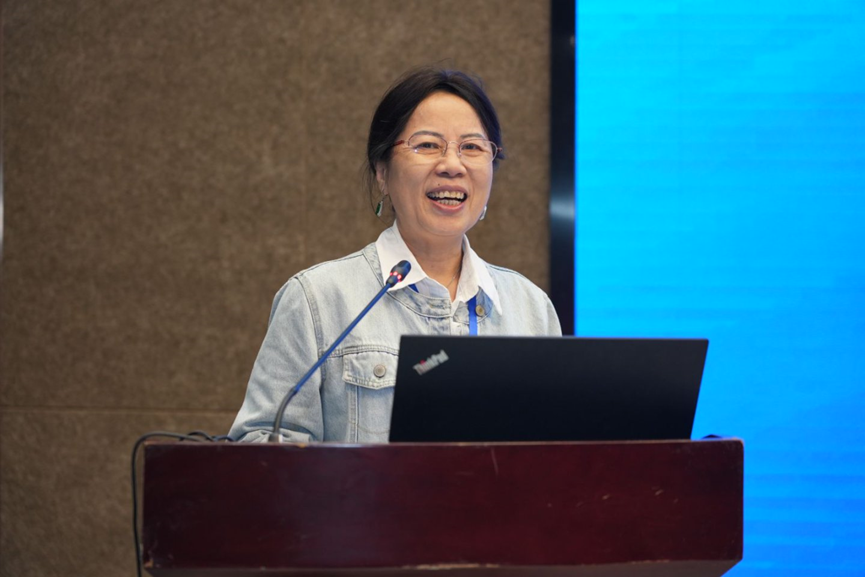
Conference chaired by Prof. Liang Qi, Sun Yat-sen University
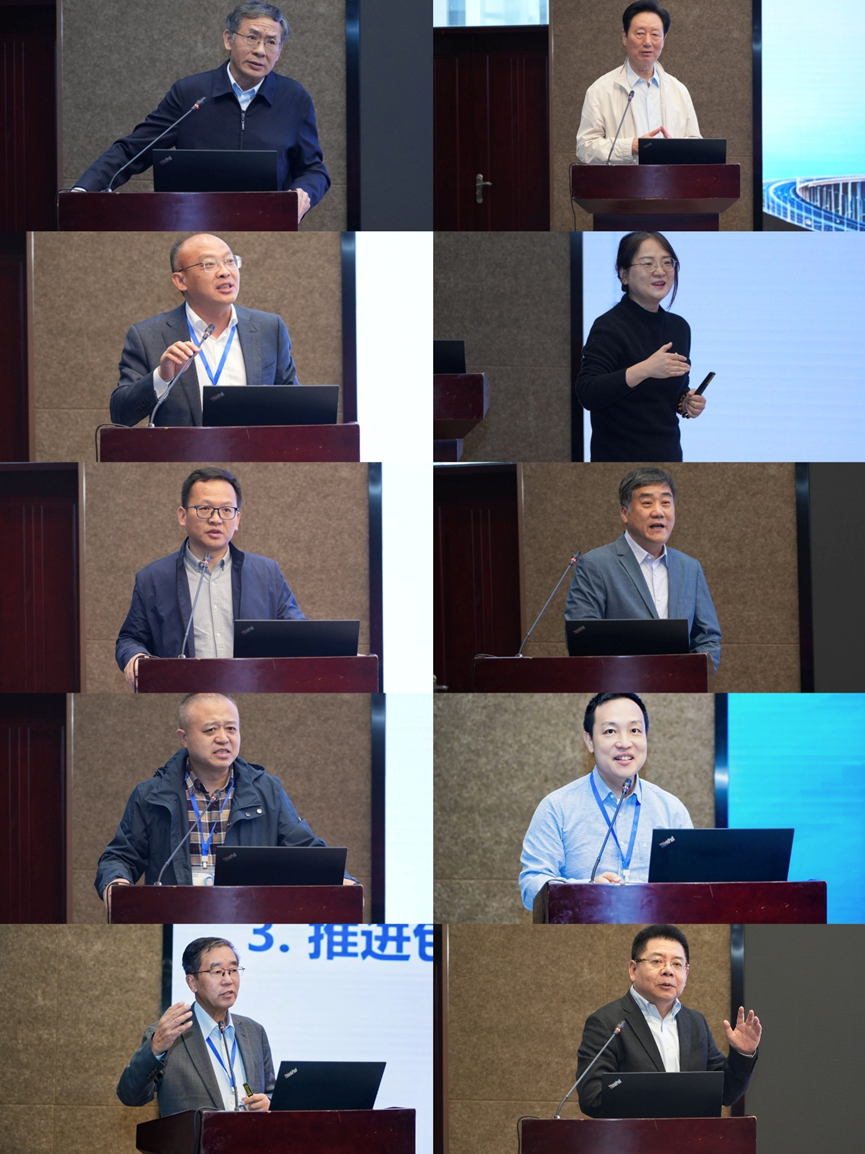
Plenary speakers (from left to right): Wei Houkai, Cheng Changchun, Wang Xianzhu, Zhang Qinghua, Yi Zhigao, Tian Suhua, Li Shijie, Li Jie, Li Shi, Gan Chunhui
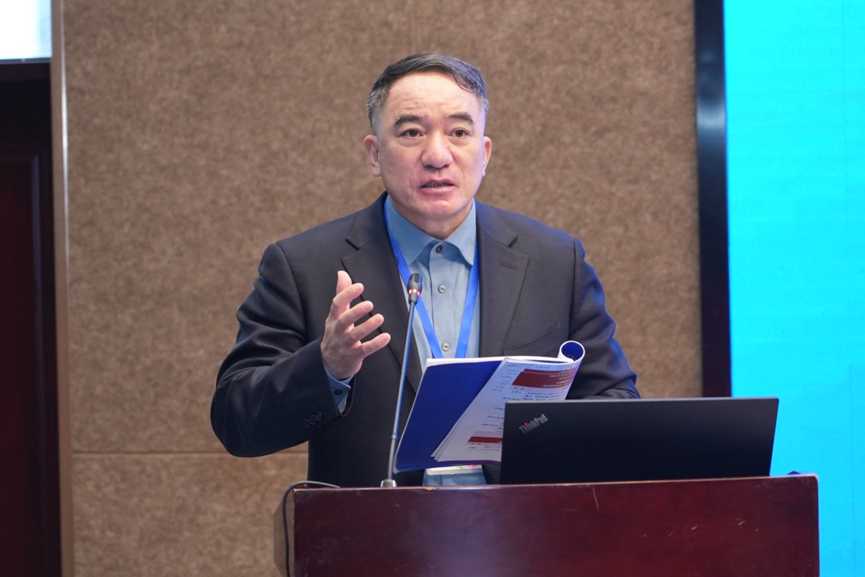
Prof. Zhang Jie, Deputy Director of the Institute for Capital Development and Strategy, Renmin University of China, chaired the session
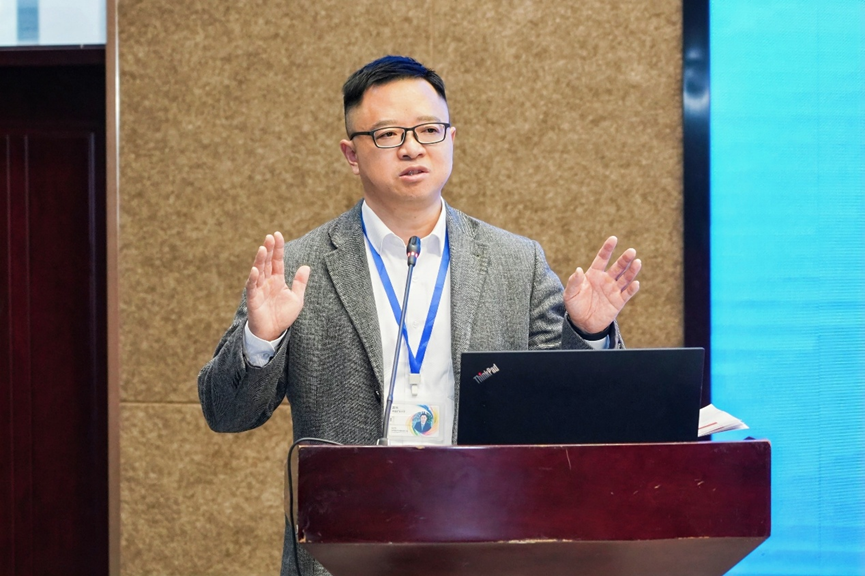
Prof. Gao Wei, Council Member of the China Enterprise Reform and Development Society, chaired the session
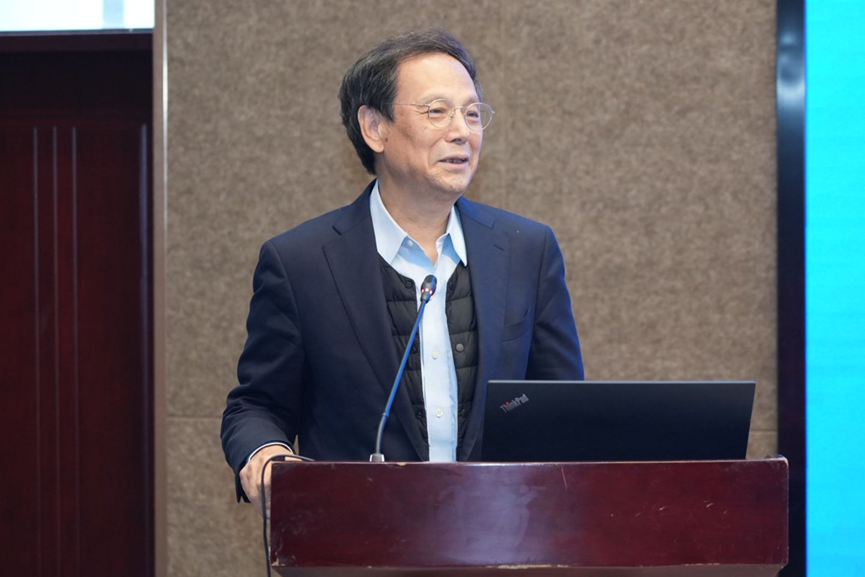
Prof. Zhao Wei, Zhejiang University, delivered the conference summary
From October 17 to 19, 2025, the 14th Annual Conference of the Chinese Spatial Economics Association was successfully held at CUMT. The conference was jointly organized by CUMT and the Spatial Economics Committee of the Chinese Regional Science Association, and co-hosted by SEM and the Research Center for Regional Collaborative Innovation and Development of CUMT.
With the theme “Global Transformation and the New Landscape of China’s Spatial Economy: Intelligent Driving, Spatial Governance, and Strategic Transformation,” the conference brought together distinguished experts and scholars from renowned universities, research institutions, and industry sectors across China. Participants engaged in in-depth discussions on cutting-edge theories and practical applications in spatial economics.
The opening ceremony was held on the morning of October 18 at the Lecture Hall of the Library, Nanhu Campus, CUMT. Prof. Ding Zhihua, Dean of SEM, delivered a welcome speech on behalf of the host institution, extending warm greetings to all experts, scholars, and young talents from across the country.
In his address, Prof. Ding introduced the university and the school, emphasizing that spatial economics, as an interdisciplinary field linking space–industry–society–ecology, has become an important theoretical foundation for regional coordinated development, urban–rural integration, digital economy, and common prosperity. He expressed hope that the conference would explore new spatial economic patterns driven by intelligent technologies, deepen studies on spatial governance and strategic transformation, inspire young scholars’ research enthusiasm, foster a Chinese school of spatial economics and an independent knowledge system, and jointly promote theoretical innovation and practical development in the field.
Prof. Liang Qi, Chair of the Spatial Economics Committee of the Chinese Regional Science Association and Chair of the Conference from Sun Yat-sen University, delivered remarks on behalf of the organizers. She reviewed the 14-year academic journey of the committee since its establishment in 2011, and highlighted the scholarly value and contemporary relevance of this year’s focus on intelligent driving, spatial governance, and strategic transformation. Prof. Liang noted that research on spatial economics in China is now facing new development opportunities. She called for grounding research in Chinese realities, accelerating the construction of an independent knowledge system, and building a “Chinese school” with international influence that contributes Eastern wisdom to the global discourse in spatial economics.
The conference featured a series of high-level keynote speeches.
Academician Wei Houkai from the Chinese Academy of Social Sciences delivered a keynote titled “Accelerating the Construction of a Common-Prosperity-Oriented Modern Urban System.”
Prof. Liu Zhibiao from Nanjing University presented “Spatial Issues in Building a Unified National Market.”
Prof. Li Shi from Zhejiang University spoke on “Promoting Inclusive Reform to Achieve Common Prosperity.”
Prof. Gan Chunhui, Executive Vice President of the Shanghai Academy of Social Sciences, gave a talk on “Geopolitical Games and the Restructuring of Global Industrial and Supply Chains.”
Prof. Liu Xiuyan from Southeast University delivered a presentation titled “The Shadow of Growth, Human–Land Spatial Mismatch, and the Optimization of Urban Systems.”
These keynote reports examined key theoretical and practical challenges in spatial economics from multiple perspectives under the context of China’s new development stage.
The conference also included six parallel thematic forums covering the following research areas:
1. The AI Revolution and Innovation in Spatial Economic Theory
2. Digital Economy, Virtual Agglomeration, and Platform Transformation
3. Green and Low-Carbon Transition: Practices and Innovations in Spatial Governance
4. Urban Agglomerations, Metropolitan Areas, and Regional Collaborative Development
5. Urban–Rural Integration, Common Prosperity, and the Spatial Realization of Rural Revitalization
6. Open Patterns, Trade Networks, and the Global Spatial Restructuring
Young scholars and graduate students from universities and research institutions across the country presented papers and conducted in-depth academic exchanges.
In addition, editorial teams from major academic journals—including Zheng Hongliang, former Executive Deputy Editor-in-Chief of Economic Research Journal; Fu Xudong, Editor-in-Chief of Journal of Chongqing University; Li Jie, Executive Editor-in-Chief of Industrial Economics Review; Zhao Chao, Editor-in-Chief of Lingnan Journal and Public Governance Studies; and Gong Yu, Editor of Science Research Management—held face-to-face sessions sharing insights on journal submission experiences. Experts provided targeted guidance on academic writing, publication strategies, and research dissemination, with a focus on research design, innovative argumentation, and the process of publishing in international journals.
Since its inception in 2011, the Annual Conference of the Chinese Spatial Economics Association has been successfully held fourteen times, becoming a high-level, interdisciplinary academic exchange platform in the field of spatial economics in China.
This year’s conference, held in Xuzhou, leveraged the academic strengths of CUMT in economic management, regional development, and energy resources, further integrating spatial economic theory with regional development practice. It injected new scholarly vitality into serving national strategies and promoting high-quality regional development.
Contributors: Lü Zhanyi, Liu Zirui
First Review: Xiao Guojian
Second Review: Li Xinchun