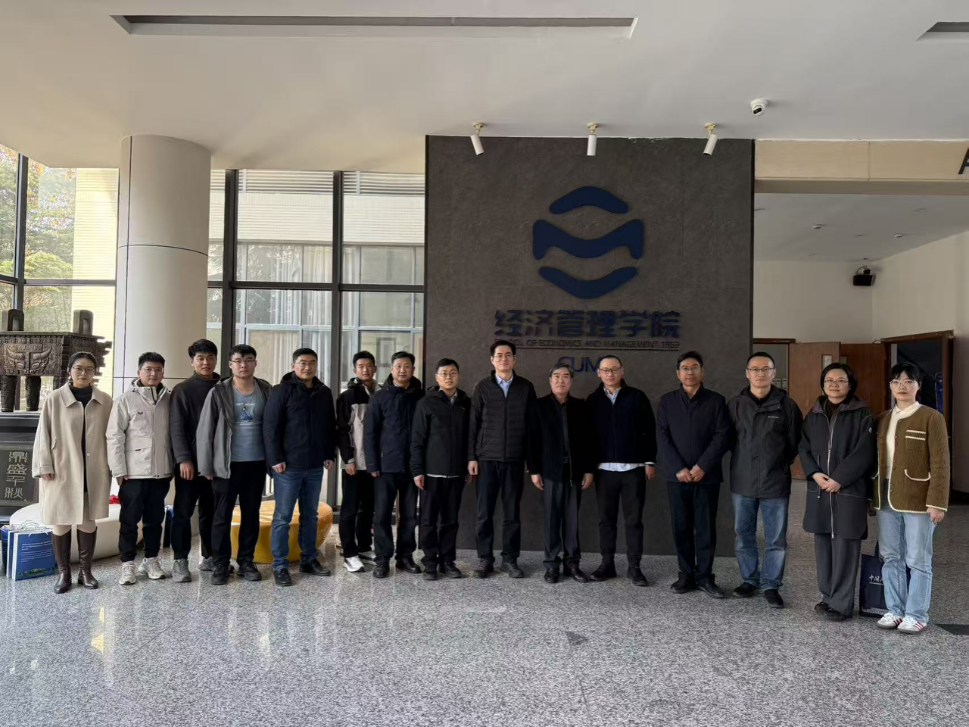
At 14:00 on the afternoon of November 28, 2025, Professor Wang Hui, Secretary of the Department of Management Science of China University of Petroleum (East China); Professor Wang Ningning, Director of the Department; Associate Professor He Lihua, Director of the MEM Center; Associate Professors Wen Wen and Ma Zhiqiang, Deputy Directors of the Department of Management Science; and Associate Professor Fu Feng and Teacher Yuan Mengqi—seven faculty members in total—visited the School of Economics and Management of China University of Mining and Technology. Together with more than ten faculty members from our School, including Professor Jiang Hongyan, Associate Dean; Professor Wang Huaqing, Director of the Department of Big Data Management Science; Professor Wang Bangjun, Director of the International Affairs Office; Professor Zhang Ming, Deputy Director of the Department of Big Data Management Science; Associate Professor Tong Peng, Secretary of the Department; and Professor Wang Di, a disciplinary exchange symposium was held in Meeting Room B503 of the School of Economics and Management. The exchange was hosted by Professor Zhang Ming of the Department of Big Data Management Science.
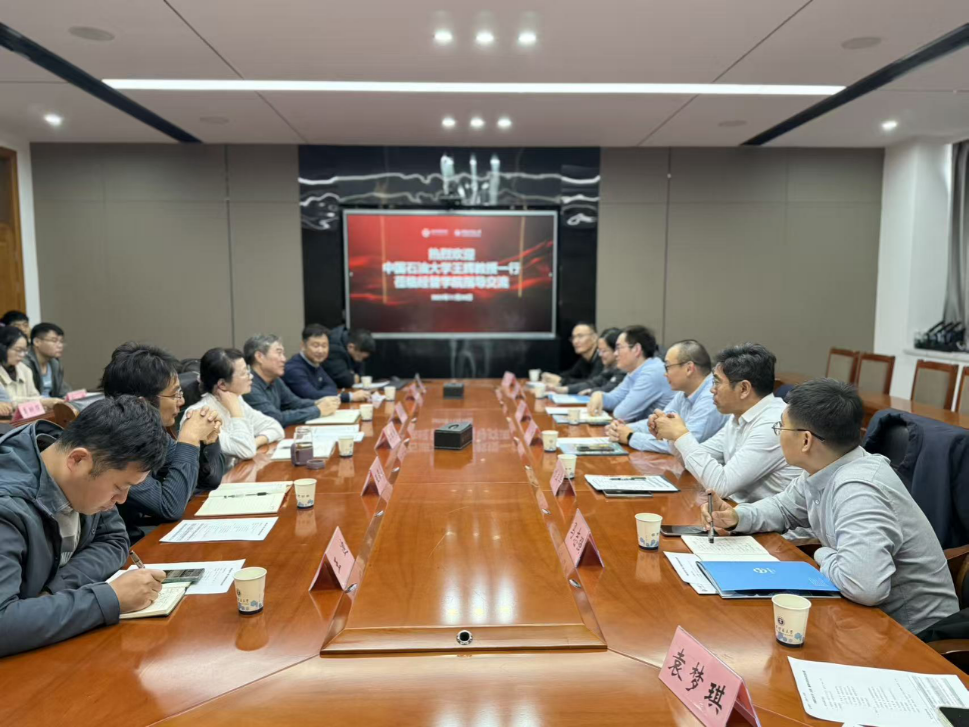
In her speech, Associate Dean Jiang Hongyan extended a warm welcome on behalf of the School to the visiting professors from China University of Petroleum (East China). She noted that this exchange was not only a dialogue between the management disciplines of the two universities but also an important engagement between universities with energy-industry characteristics under the context of new engineering and new liberal arts integration. She stated that both sides shoulder the mission of serving the national energy strategy and cultivating high-level management talents. Associate Dean Jiang emphasized that new technologies such as big data and artificial intelligence are reshaping the connotation and extension of the management discipline. She expressed her hope that through this exchange, both sides could jointly explore a new disciplinary development path that keeps pace with the times, aligns with industry needs, and promotes interdisciplinary integration. She also provided a systematic overview of our School’s disciplinary setup and development, program structure and talent cultivation, and scientific research progress.
Professor Wang Hui, Secretary of the Department of Management Science of China University of Petroleum (East China), expressed sincere gratitude for the warm reception from the School of Economics and Management. He noted that the two universities share similar disciplinary backgrounds and development missions, and that this exchange provides a valuable opportunity for mutual learning. He introduced that the Department of Management Science at China University of Petroleum, based on existing innovations in engineering management education, plans to establish a big data program. He hoped that this exchange would serve as a new starting point for substantive cooperation in curriculum co-construction, faculty exchanges, and scientific research collaboration. Professor Wang Hui then introduced the academic fields and professional programs of his institution’s management discipline.
Professor Wang Huaqing, representing the Department of Big Data Management Science, introduced the department’s explorations and achievements in disciplinary development, program layout, and talent cultivation. He provided a systematic overview of the curriculum system and research platforms built around the theme “Big Data + Energy Management,” and highlighted the department’s major achievements in student cultivation. He emphasized that students from the department are not only able to compete with students from computer science programs but also excel at using data thinking, data management, and data-driven decision-making to solve complex management problems across industries. Professor Wang expressed his hope to strengthen cooperation with the Department of Management Science of China University of Petroleum (East China) and jointly build a talent cultivation model for big data management that aligns with the development of the new era in China.
Professor Zhang Ming introduced specific practices of the Department of Big Data Management Science in student cultivation models, international cooperation, and university–enterprise collaboration. He emphasized that the undergraduate program adheres to a student-centered approach, adopting different cultivation models based on students’ future paths (academic advancement or workplace employment), and focusing on developing corresponding research potential or practical skills. Through initiatives such as building New Liberal Arts laboratories, undertaking joint research projects, and establishing internship bases, the department promotes deep integration between academic research and industry needs, helping students achieve an effective transition “from classroom to industry” and “from theory to practice.”
Professor Wang Ningning, Director of the Department of Management Science of China University of Petroleum (East China), provided a detailed introduction to the department’s disciplinary layout and shared the department’s practices and reflections on program upgrading under the new engineering background. She highlighted their experience in strengthening students’ engineering management capabilities and data analysis competencies.
Associate Professor He Lihua, Director of the MEM Center, introduced the center’s innovative initiatives in training high-level, application-oriented engineering management professionals, including modular curriculum design and joint training mechanisms.
During the open exchange session, participating faculty members engaged in lively and in-depth discussions on topics such as “the application of big data in the optimization of energy systems,” “pathways for interdisciplinary integration of management disciplines,” and “coordinated cultivation of students’ scientific and technological innovation capabilities.” Both sides exchanged views on potential research collaboration directions, sharing teaching resources, and jointly organizing academic activities, and expressed the intention to further promote regular exchanges.
After the exchange session, faculty members from both sides visited the Huaihai Campaign Martyrs Memorial Tower to carry out a Party branch co-building activity, strengthening their commitment to the fundamental mission of fostering virtue through remembrance of revolutionary martyrs and building consensus on educating talent for the Party and the nation.
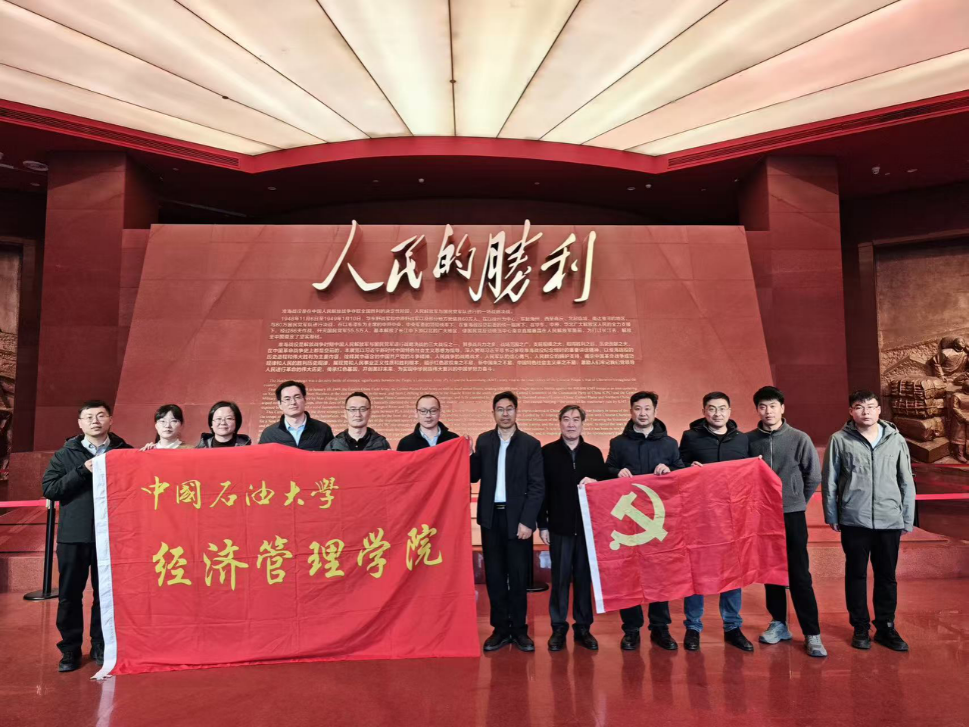
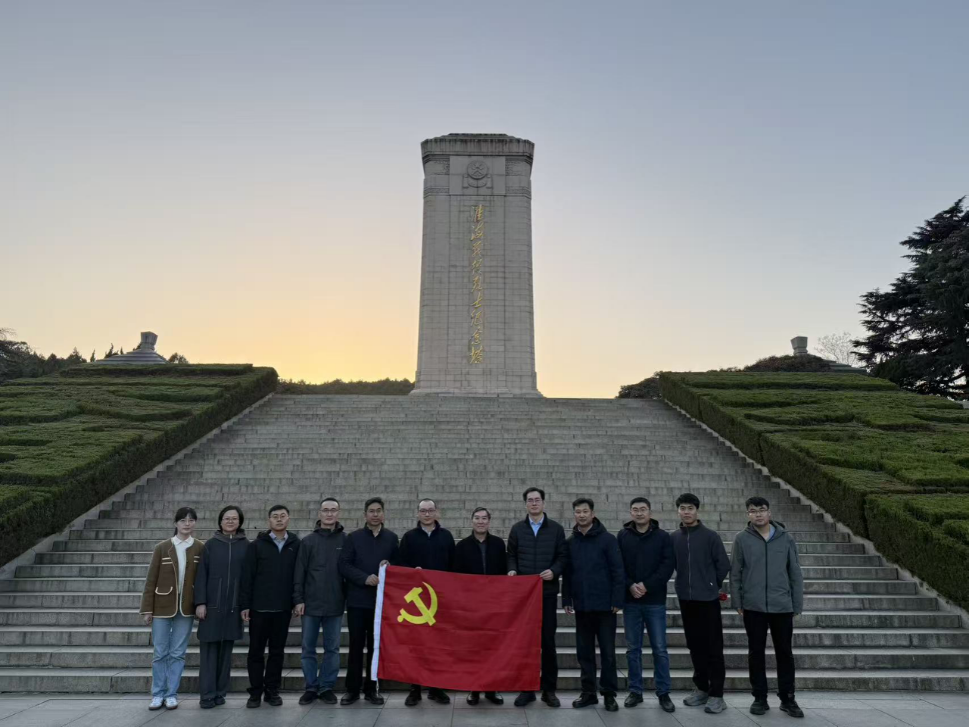
This exchange activity strengthened mutual understanding and professional resonance between the management disciplines of the two universities, laying a solid foundation for future cooperation in talent cultivation, scientific research, and social service. Both sides expressed their commitment to actively exploring the establishment of a long-term interaction mechanism, jointly promoting the innovative development of management disciplines with characteristics of the energy industry, and contributing to national strategies and industry development through collaborative efforts of universities.
Videography: Zhang Chunxia
Writer: Zhang Chunxia
First Review: Wang Huaqing
Second Review: Jiang Hongyan
Third Review: Li Xinchun